

AIMS
- Promote the intercultural and social skills as well as the digital competencies of the full-time and volunteer staff members of the participating organizations.
- Strengthen the inclusion and participation of European citizens who wish to return to their home country or emigrate after migration.
- Establish the foundations for transnational exchange in the counselling of prospective emigrants and returnees, for knowledge generation, and for advocating for the interests of the target groups.

TARGET GROUPS
Main target group
- The voluntary and full-time employees of the three participating organisations
Secondary target group
- People who return to their country of origin, in this case Spain and Germany, after a stay abroad.
- People who live in one of these two countries and wish to emigrate.

ACTIVITIES
Online workshops
A total of nine online workshops were held in the project, covering the various thematic focuses of the project. Some of these online events dealt with the methods of digital counselling and the presence in social networks. We brought in external experts from NGOs, universities and other return initiatives for these workshops.
Learn more
We have held the planned online workshops, the contents have been implemented according to the project proposal (kick-off date. Introduction of the organisations, the steering group and the participants; target groups and problems; local, regional and national resources; methods and techniques of education, counselling and empowerment; social networks and online tools in education and counselling)
A number of workshops on digital counselling and social media presence have also been added. An initial event on this topic during the face-to-face event made it clear that the need and interest of voluntary and full-time members is so considerable that the steering committee decided to give the topic more space. A total of 5 additional events were organised to address the topic from different perspectives.
As originally planned, the participants independently prepared some of the sessions and gave presentations on the various focal points. To this end, they have dealt intensively with the environment of their organisation, for example through a micro-survey of the needs of service users or local, regional and national resources.
Two of the sessions were also supplemented by blended learning formats. In preparation for this session, the participants were able to draw on recordings of discussions with Prof. Erlinghagen and the coordinator of the nationwide network of returnee organisations, Katrin Gottfried.
Face-to-face Events
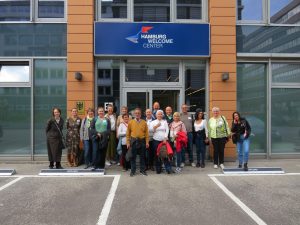
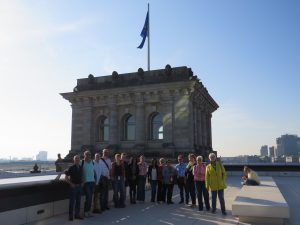
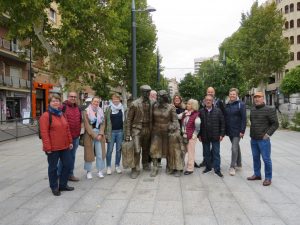
In three face-to-face events (Hamburg, Berlin and Granada), the volunteer and full-time participants got to know the work of the host organisation, the needs of the different target groups and the local and regional resources. This exchange with the network partners and representatives from politics and administration strengthened the understanding of the context, the background and the political discourse on migration and return.
Learn more
The face-to-face events served to familiarise us with the work and environment of the host organisation, and in Hamburg and Granada we also specifically sought to talk to returnees and those wishing to emigrate.
In Granada, for example, we had the opportunity to talk to returnees from different generations and to compare the different problem situations. What is astonishing is the similarity of the difficulties they encounter and the enormous need for information and support that even young returnees have, despite easier access to information platforms on the Internet.
We also entered into dialogue with a wide variety of stakeholders. In Granada, these were mainly civil society organisations (Granada Acoge) and municipal actors (Granada and Torrox mayors’ offices); in Berlin, we held talks with migrant organisations and adult education providers (La Red e.V. and MinorKontor) and the federal government (Federal Ministry for Family Affairs, Senior Citizens, Women and Youth); in Hamburg, we met with organisations active in the field of migration (Evangelische Auslandsberatung e.V., Hamburg Welcomecenter) and securing skilled workers (Hamburg Chamber of Commerce).
On these occasions, we presented the project and got to know the activities and policies of our dialogue partners in the field of emigration and return.

ADDED VALUE
- To offer an opportunity to explore comprehensive educational and counselling concepts for the European migration space.
- To open up a space for exchange among partner organizations working with the same target groups but with different structures and approaches.
- Overcoming path dependencies and questioning learned and internalized routines.
- To improve knowledge among decision-makers and counselors regarding the work, issues, methods, and resources
- To create a positive impact on the quality of work of these organizations
- Offer greater visibility of the needs of returnees and prospective emigrants at the European level.
And towards the future…
- To explore the possibility of expansion and sustainability of the cooperation with various partners at the European level (European Return & Migration Network (ERMiNe))
CONCLUSIONS
Challenges
Organisational challenges
- Insufficient funding.
- Complex knowledge management due to very different case constellations.
Contextual challenges
- European, national and regional levels are hardly sensitive to the issue, except for the shortage of skilled labour.
- Resources do not correspond to the legal framework.
- Prevailing narratives of freedom of movement play on the challenge of returning and migration down.
- Strong differentiation of target groups.
- The necessity to integrate social networks and new technologies more strongly into work processes.
- No exchange with similar organisations (yet).
Working together towards common goals
- Improving skills in the area of social networks and digitalisation.
- Establishment of a European network of counselling and support structures for Returnees and emigrants.
- Getting to know national narratives about return and migration, developing common narratives about freedom of movement and the added value of the experience abroad.
- Exploring new funding opportunities at European level.
- Systematically promote the exchange of counselling approaches and methods.
An Overview of the Project

30+ Participants
Our project involved more than 30 participants, ranging from individual persons and experts on migration or social media to several organizations across Europe.

9 Workshops
Throughout the project, workshops and collaborative learning experiences provided a platform for participants to share their expertise, explore new approaches, and co-create solutions to their shared problems.

Online Meetings
The collaborative environment of the project was predominantly cultivated through online meetings, which enabled seamless communication and collaboration among participants from different European countries.

Networking
Networking across organizations and experts was essential for forging partnerships, sharing knowledge, and leveraging resources to address the multifaceted challenges of migration. By connecting diverse stakeholders, the project facilitated collaborative efforts, promoted innovative solutions, and ensured a more holistic and inclusive approach to migration in Europe.

Communication
The diffusion of the project on social media highlighted organizations’ increasing willingness to embrace digitalization and engage with innovative communication channels. By leveraging social media platforms, the project reached a broader audience, sparking interest among organizations eager to learn more about the benefits of digitalization in addressing migration and mobility.

Achievements
The project’s achievements in networking across Europe, hosting common workshops, and facilitating shared learning have been notable. Through collaborative efforts, personal contacts were established, fostering stronger ties among the participants. These achievements not only pave the way for future projects on migration in Europe but also serve as a platform for raising awareness of this pressing issue among policymakers and the broader public.