
Partners
The Werkstatt für Sozialforschung e.V. (Berlin) has been in existence since 2020.
The Asociación Granadina de Emigrantes y Retornados (AGER) (Granada) was founded in 1988 by returnees to ensure the integration and participation of both target groups.
The Raphaelswerk e.V. (Hamburg) has been in existence for more than 150 years and focuses on supporting returnees and those wishing to emigrate.

Learn more
The Werkstatt für Sozialforschung e.V. was established in late 2020 in Berlin, and in March 2021, was recognized as a public-interest organization. We are Miguel Montero, Julie Werner Markussen and Andrea Sánchez-Guijaldo.
It consosts of an an interdisciplinary team of volunteers who have been working in the field of research, training, and capacity building for decades. They collaborate with migrant community associations and other civil society actors to create learning spaces, share experiences, identify common needs, and provide training and education.
So far they have collaborated with the European Union, the House of Resources in Berlin, the Rosa Luxemburg Foundation, and the Landeszentrale für politische Bildung.

Learn more
The Asociación Granadina de Emigrantes y Retornados (A.G.E.y R.) was founded in Granada in 1988, with the main objective being to assist emigrants who were beginning to return in large numbers from the countries they had emigrated to during the 1960s and 1970s, primarily in terms of quickly and effectively securing their rights.
The association is responsible for defending the rights of emigrants and returnees. Emigrants are referred to because, since the 2008 economic crisis, there has been a resurgence in emigration. Therefore, the association works daily to ensure that these emigrants have the maximum possible guarantees in their destination countries.
Regarding returnees, advocacy continues for their economic rights, but also their social rights, which have recently been severely limited.
Moreover, in AGEyR, an important training effort is also made with weekly language courses and intensive courses at different levels in German and other european languages.
Additionally, agreements have been signed with various institutions to carry out internships, courses, etc., and there is a European social volunteering program with the German institution Diakonie Neuendettelsau.

Learn more
Raphaelswerk e.V. is a recognised central specialist association of the German Caritas Association and operates as a Catholic association on behalf of the DBK (German Bishops’ Conference). Within migration counselling, Raphaelswerk e.V. focuses on the areas of emigration and return/remigration and can draw on over 150 years of expertise and experience. It is the counterpart to integration counselling, which is often offered by other welfare organisations in Germany.
An important focus of Raphaelswerk e.V. is its specialist policy work in the field of emigration and remigration at national and international level, as well as providing specialist advice and training for advisors, supporting advice centres by pooling and passing on information, organising training courses and conducting research. In addition, the network’s counsellors are advised on specific and complicated individual issues. Volunteer refugee helpers and Caritas counsellors receive specialist support on emigration and remigration issues.
The Raphaelswerk also stands for sound and valid information and counselling for people who want to or have to leave Germany temporarily or permanently. In addition, German citizens who decide to return to Germany also receive counselling.
The counselling focus on emigration therefore includes
- people living in Germany who want to live and work abroad permanently or for a limited period of time
- people who live in a binational partnership and are considering emigrating to the home country of their foreign partner or to another country
The counselling focus on return | onward migration includes
- refugees who wish to migrate to a third country (onward migration counselling)
- refugees who want to or have to return to their country of origin (voluntary return)
- german people seeking advice who wish to return to Germany after a longer stay abroad
Counselling is provided on entry conditions, work opportunities, residence regulations, living conditions, school systems, social systems and health insurance worldwide, on cultural particularities, on questions of binational marriage and custody, on the return to the country of origin of refugees and on onward migration. Counselling is provided via modern communication media such as an online counselling platform, email or video telephony or in person at counselling centres.
Each of these areas of counselling requires different qualifications and specific knowledge from the specialist counsellors dealing with the respective topics. Counselling is not just about providing information. It is always holistic and open-ended.
Raphaelswerk e.V. can draw on a large network of national and international network partners for its work, which it has built up over many decades.
The General Secretariat is based in Hamburg. The counselling centres are run by the respective diocesan or local Caritas associations.
The European Network
The core group of the network has been working together since 2022 within a small scale partnership funded by Erasmus+. We did some research and identified some organisations with a similar portfolio.
Starting in June 2023, we reached out to like-minded organisations in Europe. The organisations involved in the network are different in their structure and working protocols, but they share a similar mission: to offer assistance to European citizens returning to their home countries or wishing to migrate.

Learn more
Volvemos is a pioneering initiative that has been working since 2016 to facilitate the return of migrants to Spain under the best conditions. Volvemos focuses its activities on public policies and services for migrants, with an emphasis on people with fewer resources, women, and young people, regardless of their level of education.
Their main activities include:
● Creation and facilitation of a community of migrants with the intention of returning. As of today, the community consists of 14,000 individuals.
● Advisory services to Public Administrations on return policies.
● Career guidance for migrants wishing to return to Spain.
● Guidance for migrants wishing to start a business or relocate their companies to Spain.
● Resolution of administrative questions related to return.
● Psychological support for migrants.
● Support for companies in recruiting professionals.
Currently, six people work full-time on the project on a permanent basis. The team is complemented by approximately 20 external collaborators and 2 interns.
Unreported focuses its activities on public policies and services for migrants, with an emphasis on individuals with fewer resources, women, and youth, regardless of their educational level. They have fully developed and implemented public policies to promote the integration of immigrants in Spain. Their experience in software development and the creation and facilitation of our community has enabled them to carry out tasks related to the development of the technological platform and project communication.
Their organization provides services to individuals of any profile or age, although the most common profile within their community is individuals between 30 and 45 years old, with university education. These individuals, having completed their studies in the years following the economic crisis of 2008, were unable to find jobs matching their expectations and decided to emigrate in search of employment opportunities. Over the years, they have developed personally and professionally abroad and now wish to return to their home country. Furthermore, Unreported has collaborated with multiple Public Administrations in Spain, including notable entities such as the State Secretary of Migrations, the City Councils of Barcelona, Málaga, or Córdoba, as well as the regional governments of Castilla-La Mancha, Castilla-León, Navarra or Aragón.

Learn more
Safe Home Ireland (Safe Home) is a not-for-profit Irish charity with a global remit. The organisation was set up in 2000 to facilitate the desire for qualifying older Irish-born emigrants abroad to return to their homeland. Over the years, the organization has evolved from simply providing a housing option for qualifying older Irish-born emigrants. Alongside this role, the organisation now provides a range of additional services that are available to anyone, regardless of their age, location or circumstances. Safe Home is core funded by the Department of Foreign Affairs under the Emigrant Support Programme and other smaller project funders.
Key Services are as follows:
- Resettlement and reintegration
- Individual Assistance
- Case management
- Pre-return outreach and engagement
- Evaluation, advocacy and policy liaison
Since inception, Safe Home has directly assisted just over 2,800 qualifying applicants return to secure accommodation back in Ireland and countless others via its information and outreach service. See www.safehomeireland.com for contact details and more information.

Crosscare Irish Diaspora Support Project
Learn more
Crosscare Irish Diaspora Support Project is a specialised service aimed at supporting Ireland’s global diaspora communities. Based in Dublin, they offer support to Irish citizens at all stages of their migration, prioritising those most in need within the global Irish community.
Their key service areas include:
- Irish Diaspora Support: They deliver welfare focused services to Irish citizens in need of assistance, prioritising those in vulnerable situations. Working collaboratively with Irish organisations and consular services, they support individuals and families with complex needs relating to homelessness, mental and physical health, immigration permission, advanced age, deportation, and violence. This includes Irish citizens fleeing war and conflict.
- Outreach: They collaborate extensively with welfare-focused and other Irish diaspora groups worldwide, offering capacity building training and encouraging best practices within their areas of expertise. They strive to establish networks in both traditional and emerging destinations for Irish emigrants, and engage with less connected Irish communities.
- Policy: They identify common challenges faced by Irish emigrants returning to Ireland and advance solutions at policy level. They monitor emerging trends and undertake research to contribute to an expanded understanding of Ireland’s diverse diaspora.
- Communication: They promote access to reliable information. Their website (www.diasporasupport.ie) offers a wealth of information about leaving and returning to Ireland for Irish citizens and their family members. Through webinars and across social media, they support Irish citizens to make informed decisions about their proposed emigration and return migration to Ireland.
Though established in 2022, they have been supporting Irish emigrants since the late 1980s – first as Emigrant Advice, and later as part of Crosscare Migrant Project. Since then, they have supported thousands of Irish people through their emigration and return migration journey. Crosscare Irish Diaspora Support Project’s work is made possible thanks to the Government of Ireland’s Emigrant Support Programme (ESP) and the support of its parent organisation, Crosscare – an Irish charity providing social care support in the areas of homelessness, food poverty, housing and welfare, refugee and migration, counselling and youth services.

Learn more
Barka develops vocational training, educational programmes, entrepreneurship development and accessible housing, involving not only individuals in need but also governments, local communities, civil society organisations and private companies in Ireland and abroad.
Barka e.V in Berlin is a daughter organisation of Barka Foundation for Mutual Help in Poland which was established 34 years ago to support the homeless individuals and is one of the largest NGOs in the post-communist Poland. Barka has been originally invited to Berlin by the Polish Embassy in Hamburg to support homeless as a response to the rapid increase of Polish nationals becoming homeless on the streets of German metropolis, following the EU enlargement.
First projects in 2018 were funded by the Polish Government, and were aimed at offering humanitarian support to numerous Polish rough sleepers in Berlin who found themselves in extreme life situations on the streets (e.g. long-term addiction resulting in serious health problems, disabilities, involvement in crime etc.).
Following a study visit of local Berlin charities, police and street outreach teams to Barka social and professional reintegration projects in Poland, the Berlin Senate recommended that Barka registers as a charity in Germany (Verein e.V.) to support wider cohort of homeless people of different nationalities and to qualify for local funding streams. Barka registered in 2019 as Verein in Berlin and has since been working to set up a wider partnership with the Berlin City, local homelessness charities and has become a member of Paritätische Wohlfahrtsverband in order to better address the challenges faced by a small charity and have a wider impact.
Barka in Berlin is currently preparing to start an experimental project of Social and Professional Integration Centre for migrants in Berlin. Barka in Berlin has been cooperating with relevant districts of the city of Berlin and with representatives who deal with the topic of homelessness. Barka Berlin team started operations on 10 September 2018 and has followed the concept of mutuality and building trust with persons in need.
An important element of Barka work is the street-working model based on two-person teams, consisting of a Leader who works alongside a social assistant to reach the homeless persons, including those who have been entrenched in the street life and reluctant to work with other services. With the example of their own lives, Barka Leaders inspire destitute people that it is possible to lead a normal life again: have a place to live, family and job. Persons in need start to open up and speak up and talk about their family back home whom they may have not seen for years and their legal situation (e.g. child maintenance debts, overdue court cases, bailiffs, rejection of their applications for settled status etc.). Barka cooperates with legal experts, which has been helpful in addressing a number of those cases.

Learn more
Italy Untold, an NGO based in Belgium, supports, defends and promotes the true image of Italy. It is a group of experts in communication and international relations, now focusing on the Italian diaspora in various European countries.
Italy Untold supports, defends and promotes the true image of Italy, revealing the “untold” of Italy and countering the prejudices of which the country is still victim. They are a group of experts in communication and international relations who have been interacting with institutions, the business world and stakeholders for decades.
Italy Untold, subtitled “Italy beyond perception”, is a Think Tank focused on the perception and reputation of Italy and the Italian communities in the world. Indeed, considering the huge Italian diaspora in world, several stereotypes and beliefs were created on Italians and their country of origin. Therefore, in addition to its academic research and educational outreach activities, it also aims at connecting Italian communities in the world and support their integration in case of returning to motherland, or in case of migration of Italians to other countries. In such a case Italy Untold will connect those people with the public authorities (consulates, embassies, Italian social service organizations, cultural associations and with their compatriot communities, etc.
The profiles of Italy Untold learners are quite diverse. On the one hand, there are young Italians living abroad who want to know about their opportunities in Italy. On the other hand, there are professionals and institutional representatives who want to get in touch with these communities.
Organizations we collaborated with
We entered into dialogue with a wide variety of stakeholders.
In Hamburg, we met with organisations active in the field of migration (Evangelische Auslandsberatung e.V., Hamburg Welcome Center) and securing skilled workers (Hamburg Chamber of Commerce).

Evangelische Auslandsberatung e.V. Hamburg
Learn more
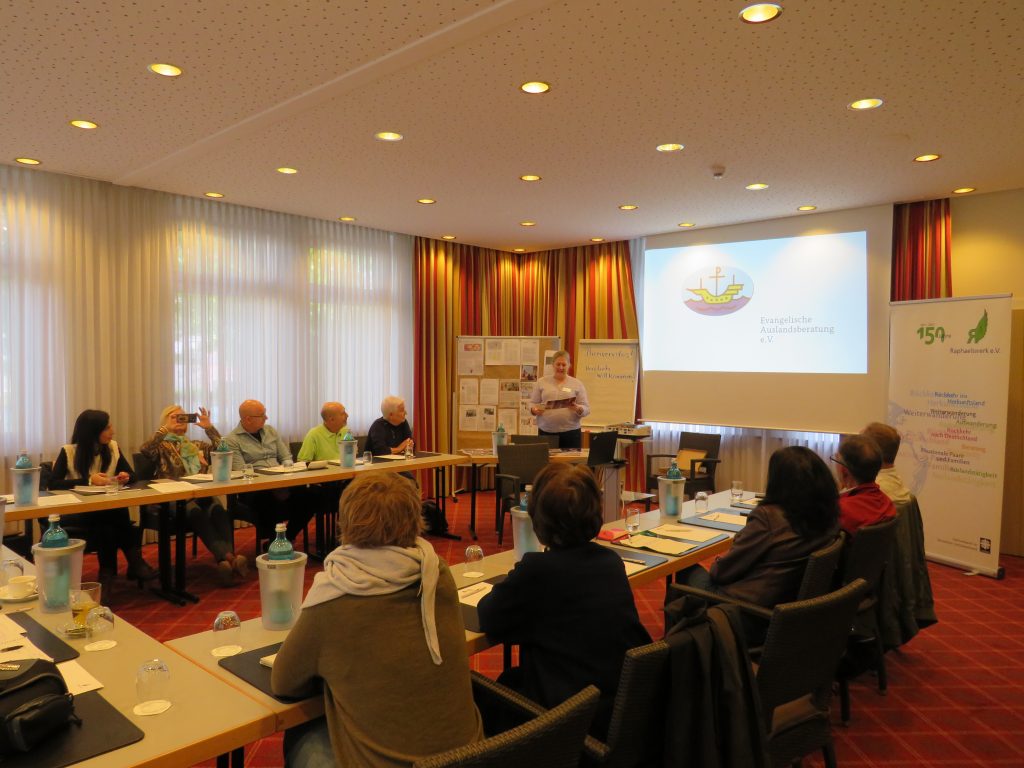
The Evangelische Auslandsberatung e.V. in Hamburg has been advising people who wish to live in another country for 150 years.
The staff provide information to people regardless of their nationality or religious affiliation. This includes information on the current immigration and residence regulations in the destination country, the cost of living and the labour market situation, the legal system, tax agreements, insurance and employment contracts, pensions and regional studies.
Julia Siebrecht reported in detail on the work and methods of the counselling provided by the Protestant International Counselling Service.

Learn more
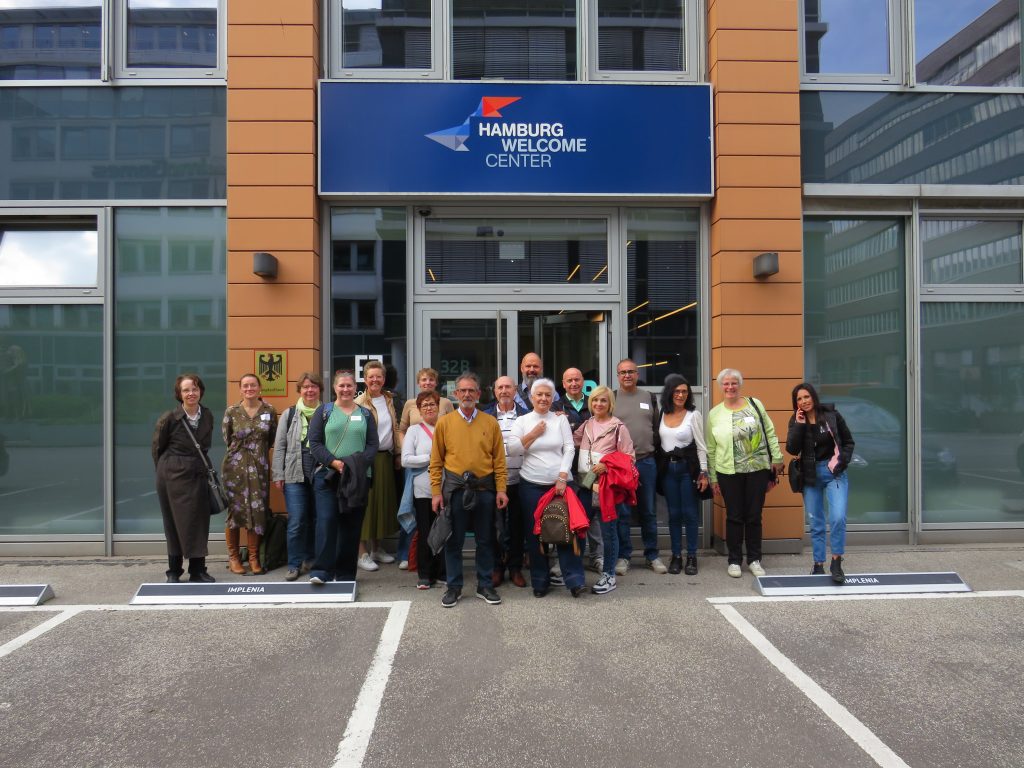
The Hamburg Welcome Center supports migrants and immigrants with skilled labour potential on their way into the Hamburg labour market.
At the same time, it advises and supports companies wishing to employ such (potential) skilled workers.
The new HWC is supported by the Department of Social Affairs, the Department of the Interior, the Hamburg Employment Agency and Job Centre t.a.h with the participation of the partners of the Skilled Labour Network and municipal service providers.
Imke Feindt, acting head of department, introduced us to the arrival structures for returnees.

Learn more
The Handeslkammer Hamburg (Hamburg Chamber of Commerce) is the self-governing body of Hamburg’s business community. It represents their interests vis-à-vis politics and administration and performs many public tasks more efficiently, more practically and more cheaply than the state.
Around 850 people are involved in the committees of the Chamber of Commerce, i.e. the plenum, the executive committee and the 32 committees. In addition, there are a further 3,800 voluntary examiners in vocational training.
One of the Chamber of Commerce’s major concerns is to help ensure that Hamburg companies have sufficient skilled labour.
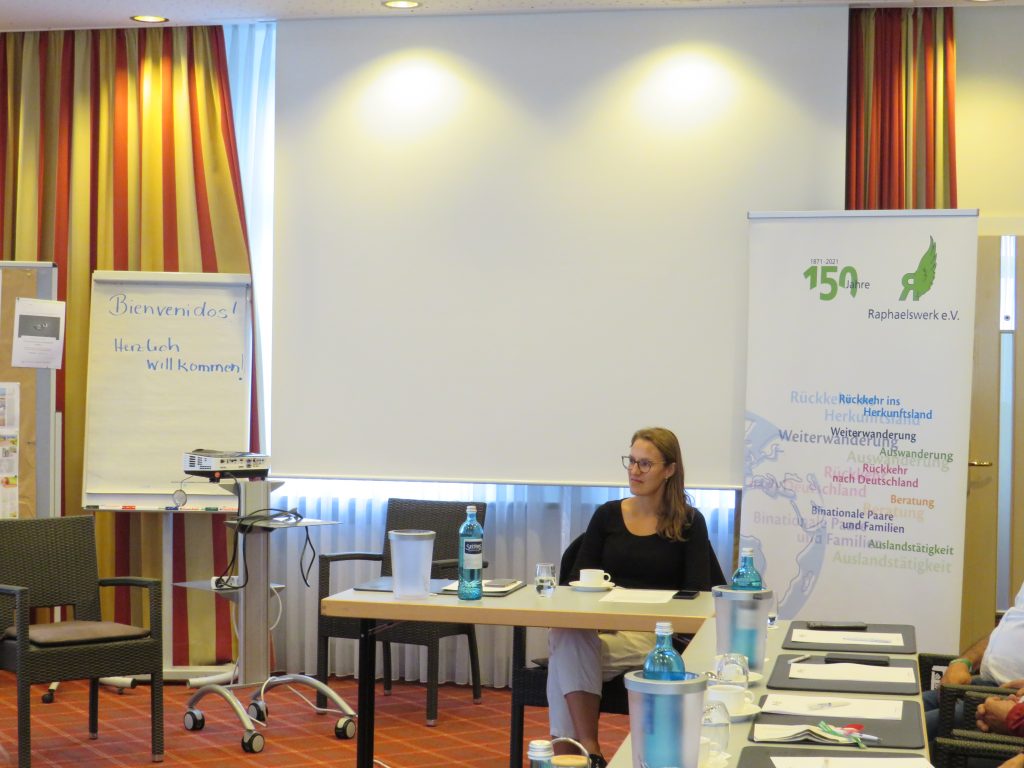
Lilian Kraus, a specialist in skilled labour at the Hamburg Chamber of Commerce, explained to us how skilled labour is needed in Hamburg companies and what role returnees play in meeting the demand for skilled labour.
In Berlin, we held talks with migrant organisations and adult education providers (La Red e.V. and MinorKontor) and the federal government (Federal Ministry for Family Affairs, Senior Citizens, Women and Youth)
Minor Projektkontor für Bildung und Forschung e.V
Learn more
Minor Projektkontor für Bildung und Forschung e.V. is based in Berlin and is supported by an interdisciplinary and intercultural team.
Minor’s work with and for socially marginalised groups is diverse, committed and scientifically sound.
Tobias Stapf introduced us to several current projects in the field of digital counselling and Social Media Streetwork.
The project develops and offers multilingual outreach initial information and referral advice on social media for marginalised EU immigrants, members of minorities and people who are homeless or at risk of homelessness.
The “Social Media Bridge” project offers information and referral counselling for refugees on social media platforms on the topic of working in Germany in seven languages.
Bundesministerium für Familie, Senioren, Frauen und Jugend
Learn more
The Federal Ministry for Family Affairs, Senior Citizens, Women and Youth supports the work of welfare organisations as well as a number of social associations and institutions at federal level.
The Emigration Protection Act, which is the responsibility of the Federal Ministry for Family Affairs, is intended to provide objective, appropriate information about entry opportunities and living conditions abroad and to protect citizens from ill-considered emigration. In Germany, church welfare organisations run nine emigration advice centres, which are increasingly also advising returnees.
The coordination of the advice centres is financially supported by the Federal Ministry for Family Affairs in the form of nationwide coordination by Raphaelswerk e.V.
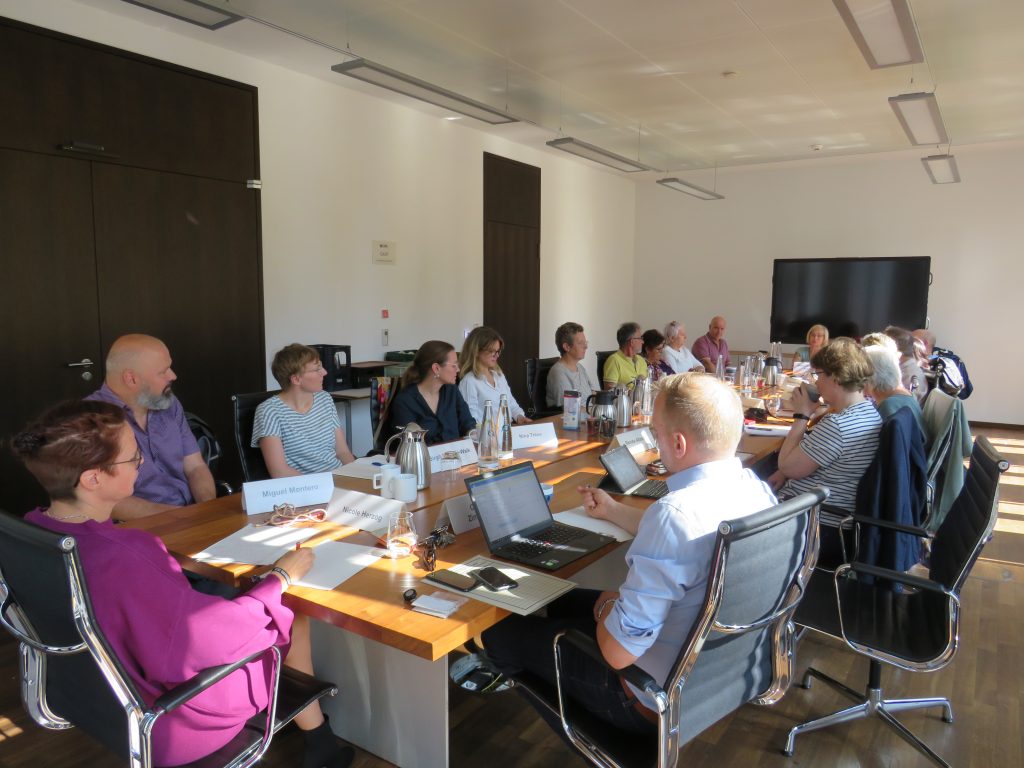
Nicole Herzog, Head of Department at the Ministry, talked to the participants about the importance of emigration counselling in Europe and reported on the Ministry’s policies in this area.

Learn more
La Red e.V. is an association that aims to support migrants in Berlin upon their arrival in Germany and in their professional and social integration.
The activities and projects of La Red cover many areas of society that are relevant to the integration of newcomers.
These include, in particular, topics such as civil society engagement, employment, environmental protection, culture, and media.
The staff members come from various countries of origin and have extensive experience in the fields of integration, political education, counseling, arts and culture, and research.
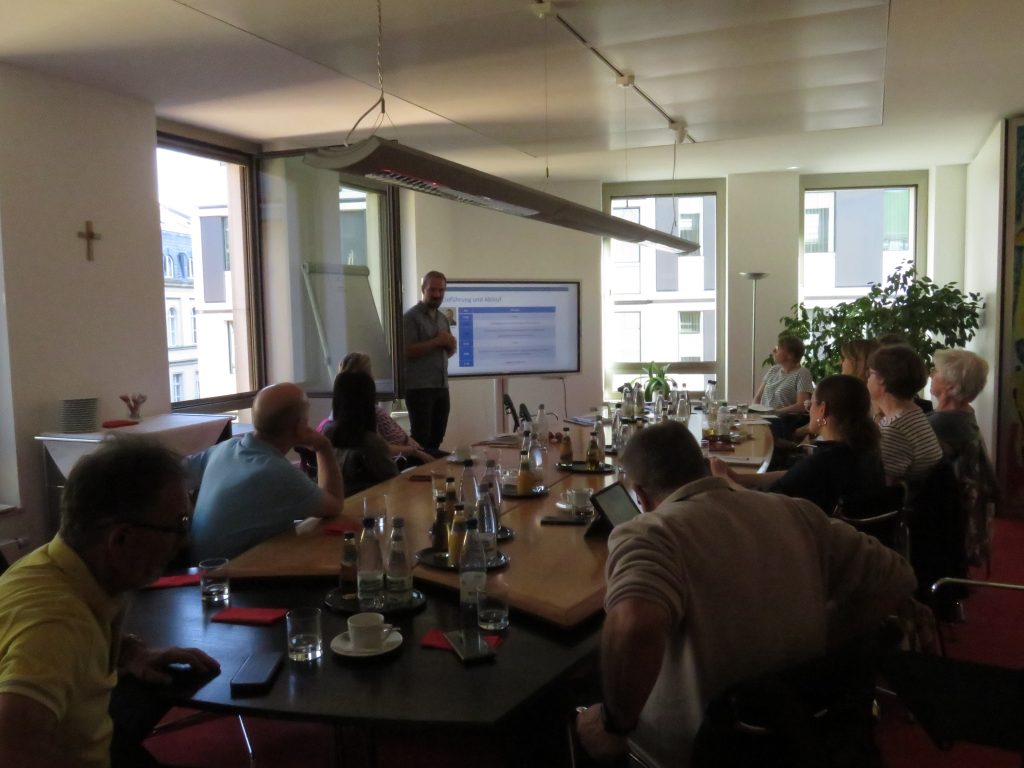
Raul Gil gave us an introduction to the importance of social networks for the work of civil society organisations.
In Granada, these were mainly civil society organisations (Granada Acoge) and municipal actors (Granada and Torrox mayors’ offices)

Learn more
Granada Acoge has been working since 1987 with the immigrant population living in the province of Granada.
With the aim that in the future we can live in an egalitarian and plural society, they dedicate their efforts to help people arriving from other places to have the necessary support to achieve decent living conditions and to be able to develop independently in the short term. In addition, we denounce social, political and legal situations of injustice or lack of attention that affect immigrants.
Marina Carbonell explained in detail the circumstances and conditions experienced by the most vulnerable groups of immigrants and the services provided by her association.
Learn more
Torrox, a town in Malaga with more than 2,000 Germans registered in the town and around 6,000 who visit Torrox as a second home throughout the year, has earned the nickname of the little Germany of Southern Europe.
Germans registered in Torrox are mostly retired, as the largest population group is between 70 and 74 years of age.
A doctoral thesis of the University of Cologne, written by Johannes Kissel in 2001, pointed out that only 3% of the Germans surveyed were fluent in Spanish.
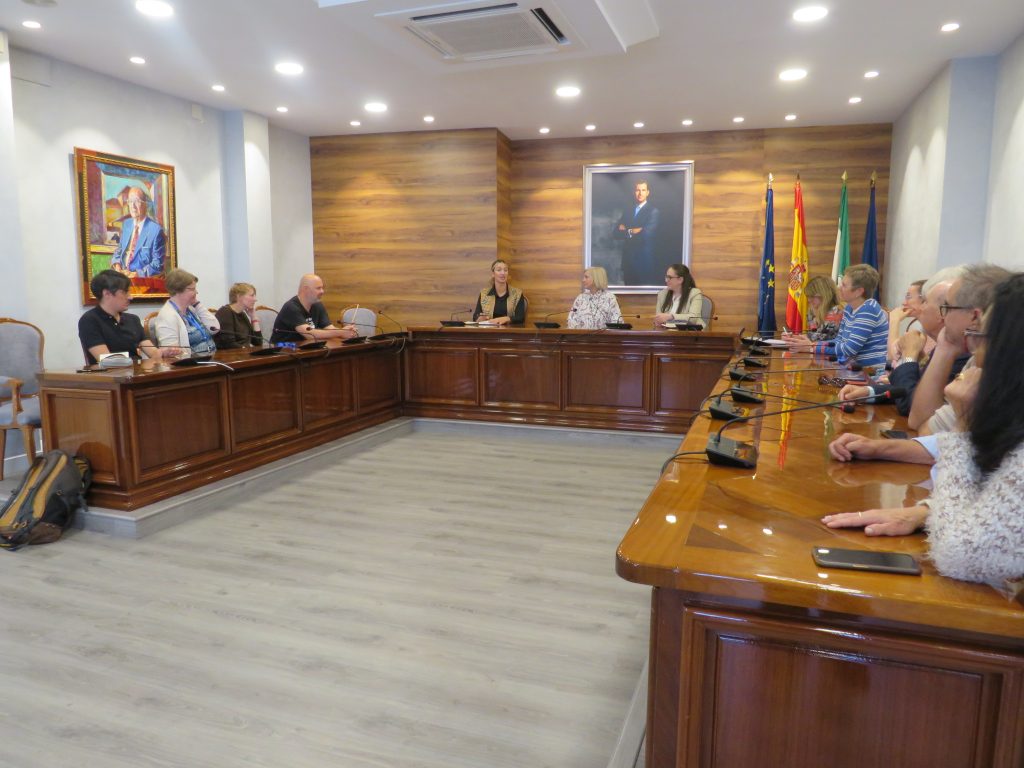
The Mayor of Torrox, Óscar Medina, and Sandra Extremera López, Councillor for Elderly Care, informed the group about the situation of the elderly Germans living in the municipality, the policies developed by the council in this area and the possibilities of promoting collaboration to improve the care of this group.
Learn more
The Granada City Council is the institution in charge of governing the city and municipality of Granada, Spain. It is presided over by the Mayor of Granada, who since 1979 has been democratically elected by universal suffrage. Marifrán Carazo Villalonga, of the Popular Party, currently holds the title.
Our interlocution was with the Area of Social Policy, Family, Disability and Elderly which is structured the municipal system of social services in Granada. Social services are the set of services, resources and benefits aimed at guaranteeing the right of all people to social protection. They aim to provide care, prevention and coverage of individual and social needs of people in order to improve their welfare.
On these occasions, we presented the project and got to know the activities and policies of our dialogue partners in the field of emigration and return.
The Advisory Board
We were able to recruit recognised experts from for the project’s advisory board.
It consisted of experts from civil society organisations and foundations in the field of migration, return and mobility from Spain and Germany, from Spanish and German universities, as well as the head of the national coordination office EURES at the headquarters of the Federal Employment Agency in Nuremberg.
They accompanied the general organisation, implementation and final conclusion of the project and enriched it with critical and constructive contributions.
sozialer und kultureller Vereine e.V.
Learn more
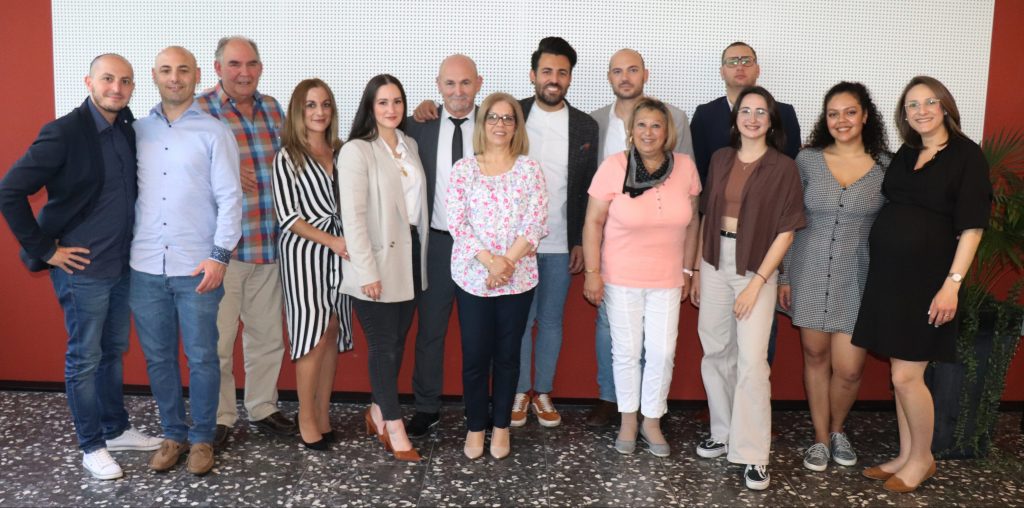
The Bundesverband spanischer sozialer und kultureller Vereine e.V. was founded in 1977 to represent the social and cultural interests of the Spanish community in Germany.
It has 59 member organizations with around 6,000 members and it is part of various associations and advocates for the integration of migrants
With years of experience, it carries out social projects, including promoting a culture of welcome and recognition for young professionals and supporting migrants in their social integration.
Nathalie Rivault
Learn more
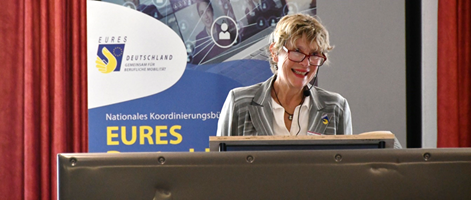
Nathalie Rivault has been working for more than 30 years in EURES (EURopean Employment Services) in various capacities.
Since 2016, she has been heading the National Coordination Office for EURES at the headquarters of the Federal Employment Agency in Nuremberg.
EURES stands for EURopean Employment Services, a network of the European Commission aimed at promoting cross-border labor mobility within the EU.
In addition, she heads the National Euroguidance Center Germany. Euroguidance is a European network for career counselors with information and counseling centers in over 30 countries. Euroguidance promotes education mobility within the EU through professional and innovative counseling services.
Sabrina Lamas
Learn more
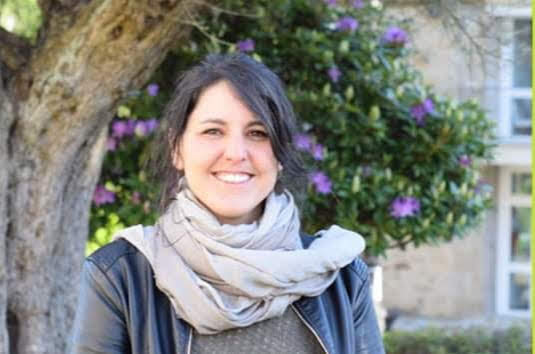
The aim of the Fundación Paideia Galiza in A Coruña, Spain, is to enhance the training and employment opportunities for young people with limited access to the job market by gaining practical professional experience in other EU countries.
Sabrina Lamas works as a project technician for youth employment projects at the Fundación. She has experience in supporting young people from Galicia who are at risk of exclusion during transnational stays in Germany.
Sabrina Lamas works as a project technician for youth employment projects at the Fundación. She has experience in supporting young people from Galicia who are at risk of exclusion during transnational stays in Germany.
Learn more
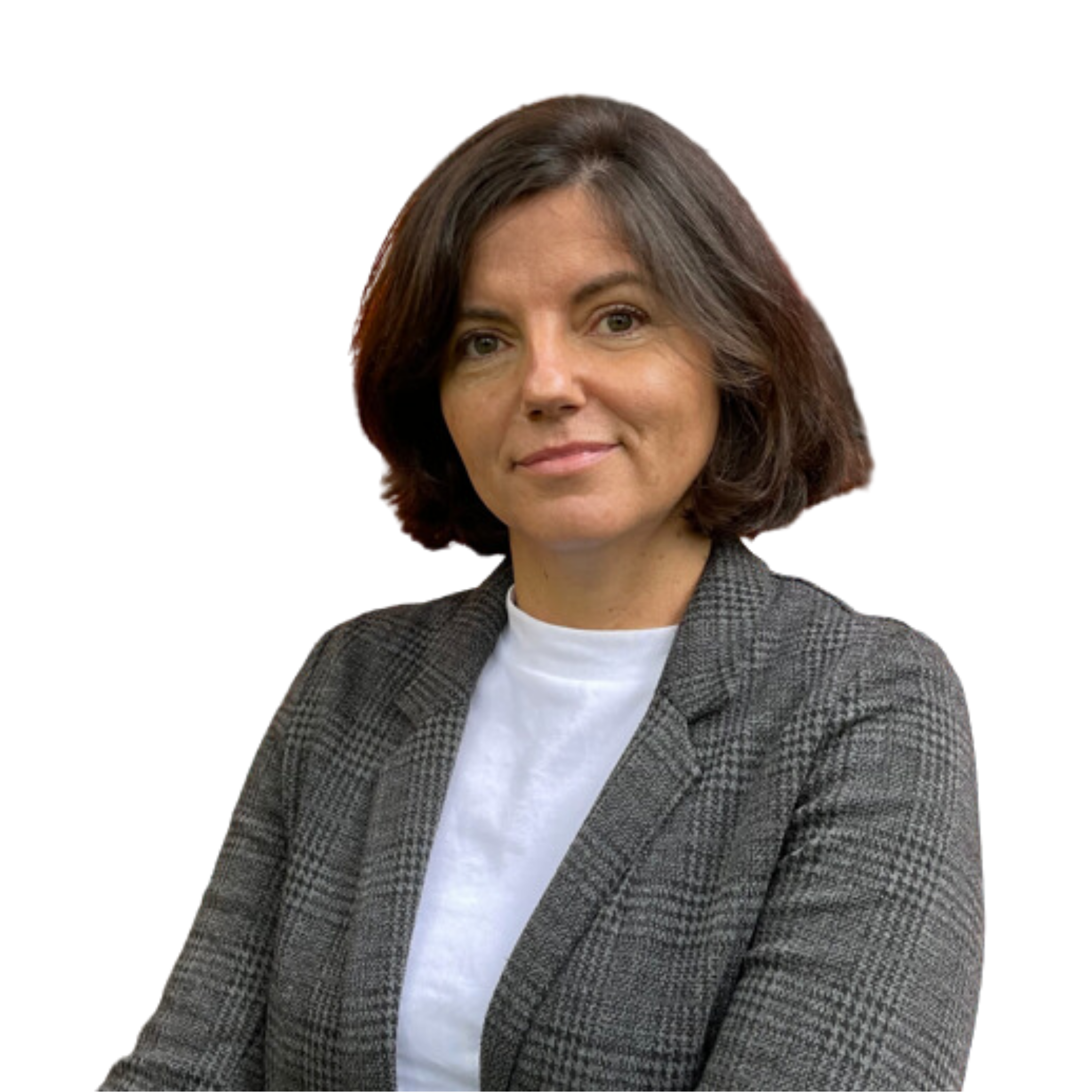
Cristina Faraco Blanco is a founder and chairwoman of La Red.
She studied Political Science and Sociology at the Complutense University of Madrid. Having lived in Germany for many years, she works on projects in the field of migration, labor market integration, and democracy promotion.

Learn more
Prof. Dr. Maike Andresen is Full Professor of Human Resource Management and Organisational Behaviour at the University of Bamberg since 2009, was Vice President for Research (2015-2018) and initiator and coordinator the H2020 project GLOMO (2017-2022).
Prof. Andresen has been as a visiting scholar at numerous universities in Europe and Australia and is a faculty member of the joint Master programme in European Human Resource Management. She has contributed numerous peer-reviewed articles to leading academic journals and to edited books, and serves on the editorial boards of Human Resource Management Journal and The International Journal of HRM.
Her main research interests are in the area of international mobility, global career management, and work flexibilisation.
Learn more
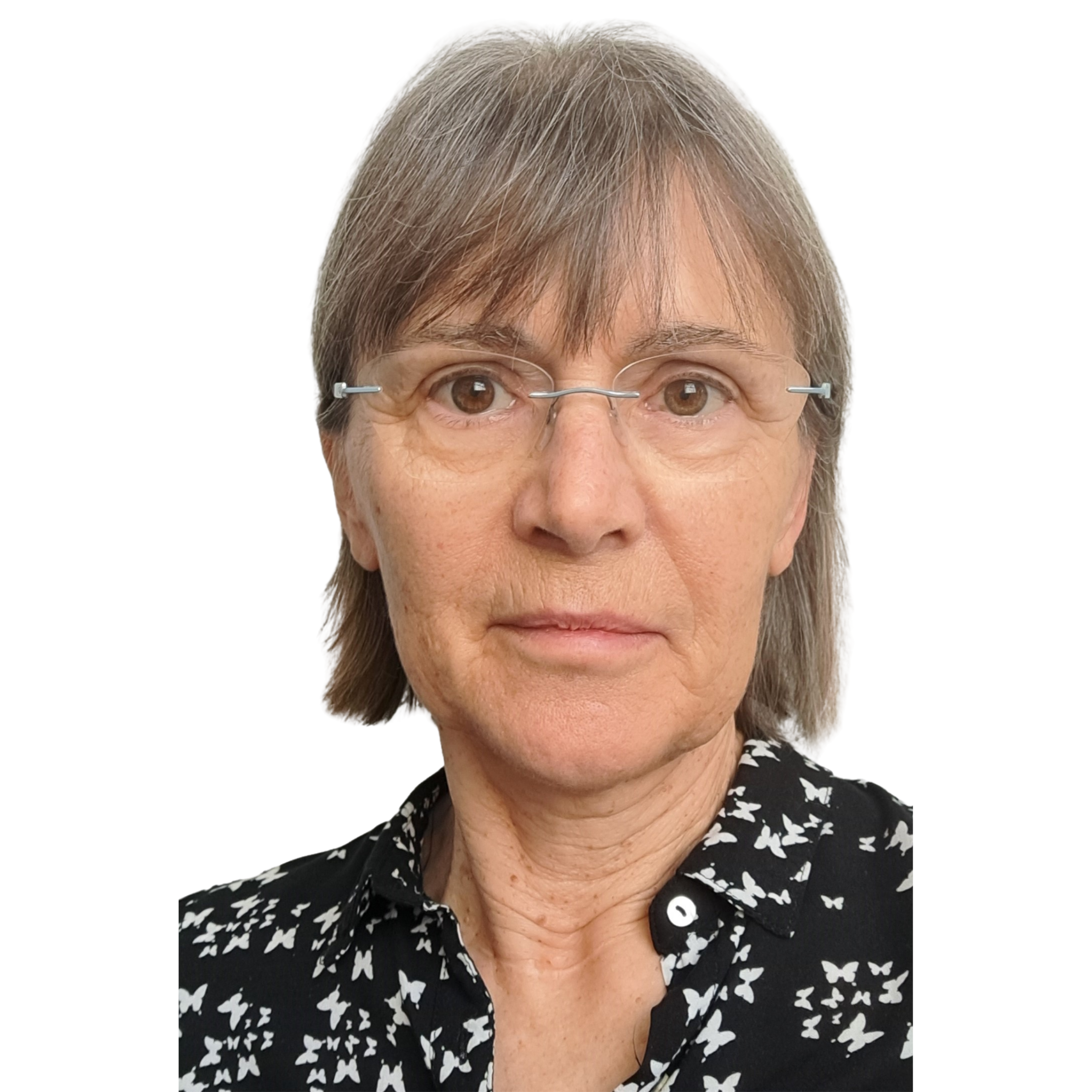
Professor Dr. Karin Vilar Sánchez is a university professor of German language at the Faculty of Translation and Interpreting at the University of Granada, Spain.
Her research focuses on:
- Linguistics: German for future translators and interpreters; comparative analysis between German and Spanish.
- Sociolinguistics: Acquisition and role of foreign languages in migration contexts; loss of mother tongue in migration situations; reintegration in the country of origin.